We're excited to announce the release of Working Patterns - a powerful new feature designed specifically for teams with part-time staff, flexible shift patterns, or employees working across multiple locations. If you've ever struggled to accurately track leave for employees who work 4-day weeks, rotating shifts, or follow different national holidays, this update is for you.
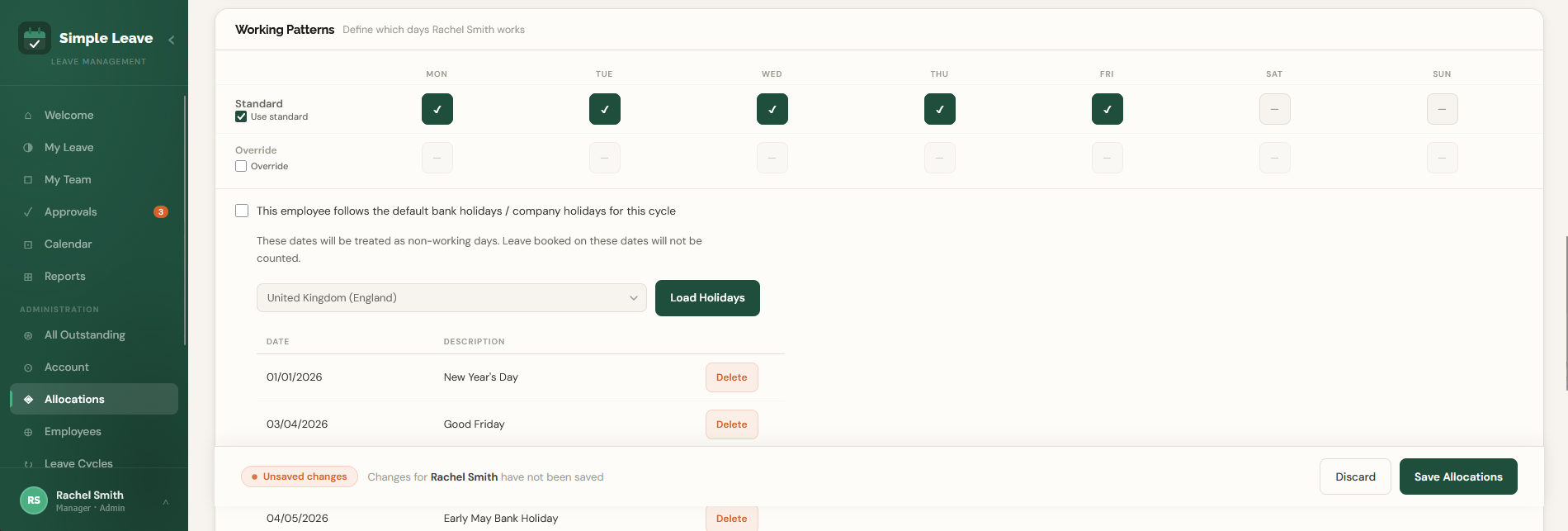
Until now, Simple Leave assumed all employees followed the same company-wide working pattern and observed the same holidays. For many small teams that works perfectly. But we heard from customers managing more complex scenarios: part-time employees who work specific days each week, shift workers with rotating schedules, and multi-location teams where employees observe different national holidays.
What Problems Does This Solve?
Working Patterns gives you the flexibility to configure unique working schedules for individual employees, ensuring accurate leave calculations and calendar views that reflect reality. When an employee with a custom working pattern raises a leave request, the system automatically takes their unique working days into account, provides correct leave balance calculations, and shows only their actual working days on the calendar.
Working Patterns was built directly from customer feedback from teams managing part-time staff and multi-location employees. It ensures accurate leave calculations for everyone, no matter how they work.
How It Works
The feature offers two key configuration options. First, custom working day patterns — define which weekdays are working days for an individual employee. Second, custom bank and company holidays — configure the specific holidays that apply to employees in different locations. For example, a part-time employee might work Monday to Thursday with Friday as a regular non-working day, or an employee in Northern Ireland can observe St. Patrick's Day while the rest of your UK team does not.
Working Pattern settings apply when new requests are created. If you change an employee's working pattern, it will not retroactively affect approved requests — the calculations in those requests are locked in place. When you create a new leave cycle for the next year, the working days pattern carries forward automatically, making it easy to maintain consistent configurations across periods.
See It In Action
Please note - this reflects an older design of Simple Leave, but the process still remains the same in the new-look version.
Real-World Examples
Example 1: Part-Time Employee
David works Monday to Thursday each week and follows the company's standard bank holidays.
His Working Pattern setup:
- Custom working days: Monday, Tuesday, Wednesday, Thursday (Friday is always off)
- Standard company holidays: Yes
Result: When David requests leave from Thursday to the following Tuesday, the system correctly recognises that Friday is a non-working day and only counts 2 working days (Thursday and Monday) against his allowance.
Example 2: Multi-Location Employee
Sarah is based in Northern Ireland while the rest of the team is in England.
Her Working Pattern setup:
- Standard Mon–Fri working week
- Custom bank holidays: Northern Ireland holidays (including St. Patrick's Day on 17 March)
Result: When Sarah views her calendar or makes leave requests, Northern Ireland holidays such as St. Patrick's Day appear as a non-working day, ensuring accurate calculations for her location.
Get Started Today
Working Patterns is available now for all Simple Leave users. To configure working patterns for your team members:
- Navigate to an employee's allocation settings
- Look for the Working Patterns section
- Toggle off the default settings and configure their unique schedule
Need detailed setup instructions? Check out our Managing Allocations documentation for step-by-step guidance, additional examples, and troubleshooting tips.
We'd Love Your Feedback
This feature was built on the back of feedback from customers. If you have suggestions for improvements or run into any issues, contact our support team — we read everything.